
Who are they? | The Founder | Other Leaders | Court cases | False teachings | False name for God | False Christ | False altar | False Holy Spirit | False prophets | False salvation | False resurrection | False judgement | False Bible | Firstborn | Trinity | Occult | Egypt | Watchtower | Other |
As
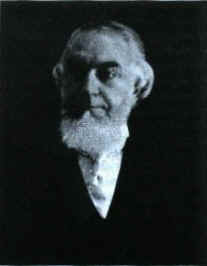
a teenager, with no theological training Charles Tazer Russell discarded ‘organised
religion’ and became the leader of a breakaway group known then as the
‘Russellites’.
Through the teachings of a man called Nelson Barbour he came to believe that Jesus had
invisibly returned to earth in 1875.
 |
Involved in many public conflicts. His wife, Maria
Ackley, in the earlier days of their marriage had proclaimed him publicly as the
‘faithful and wise servant of Matthew 24:45-47, but later she publicly denounced him
as the ‘evil servant’ spoken of in the verses that followed and took him to
court to obtain a divorce. In 1913 the Brooklyn Daily Eagle ran a front page story relating to an advertisement that Russell placed in the pages of the Watchtower advertising wheat at a dollar a pound that would yield five times more than any other brand. Many of these conflicts are recorded in Walter Martin’s book ‘The kingdom of the cults’ and Ruth Tucker’s ‘Strange Gospels’. |
He elevated his writings on the bible, in value, above the Bible on its own. By the
1890’s he was strongly urging his followers to study only his teachings saying that
his studies were ‘practically the Bible topically arranged’.
Took a great interest in the Great Pyramid of Gizeh, believing it was a prophetic tool
from God, and on the basis of its measurements he made many prophecies - written in his
‘studies in scriptures’. This ‘Bible in stone’ doctrine was renounced
in 1928 by Russell’s successor, but books containing this doctrine were still being
distributed by the organisation as late as the 1940’s.
He was a Freemason, used Freemasonry symbols, and when he
died in 1916 he was buried under a massive pyramid gravestone engraved with masonic
symbols.
By the time he died his six volume series 'Studies in Scripture' had more than
13,000,000 copies in circulation, and in a 1910 edition of Watchtower he gave greater
importance to the reading of his books than reading the Bible.
Today’s J.W’s go to some lengths to distance themselves from much of what he
said and did, but the whole movement grew from this root called Charles Taze Russell..